Commercial · Awning Care
Commercial Awning Cleaning Lexington, KY | Fabric, Vinyl & Metal
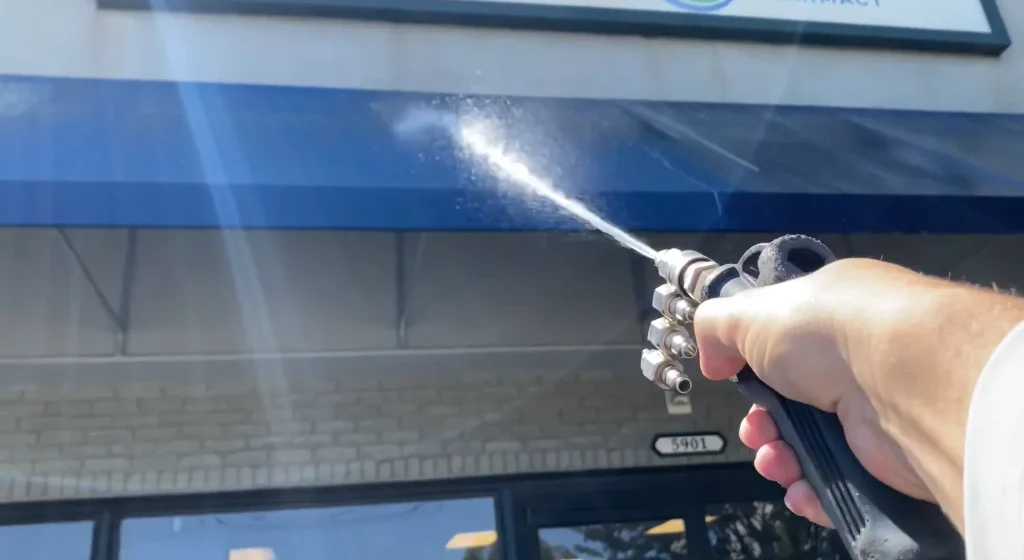
Commercial awning cleaning in Lexington lifts mildew, algae, bird droppings, and street grime from fabric, vinyl, and metal awnings with a gentle cleaner, a soft brush, and a low pressure rinse. Each awning gets a test spot first, and nothing gets blasted.
Low Pressure, Test Spot First

Insured, COI on Request
Free Estimates
Commercial Awning Cleaning in Lexington, KY
Commercial awning cleaning in Lexington brings back the look of storefront, restaurant, office, and apartment awnings that have turned green, black, or gray. We clean fabric, vinyl, and metal awnings as part of our commercial pressure washing service. Here’s how an awning wash works.
- Pricing: set after we see the awnings, since count, size, height, and condition change the work
- Method: a gentle cleaner, a soft brush on a pole, and a low pressure rinse, with a test spot first
- Wash water: planned before we start, with plants and windows protected and nothing sent to the storm drain
- Schedule: planned around when your storefront is quietest
How Does the Awning Material Change the Wash?
The material decides the wash, because acrylic fabric, vinyl, and metal awnings each handle cleaners and pressure differently. A tag on the underside, when there’s one, names the fabric maker, and the maker’s care sheet sets the rules. Black and green growth on a shaded awning is algae and mildew, and our algae, mold, and mildew guide explains why it keeps coming back.
Streaks show up when soap dries on an awning, so a wash needs shade, mild weather, or a fast rinse. Our scheduling guide explains how we plan around Lexington rain, heat, and wind.
Which Awning Types Do We Clean, and How?
Each awning type needs its own cleaner and pressure, and the table below shows how the common types are washed.
Awning type | How it’s washed |
Acrylic fabric awnings | Acrylic fabric gets a mild soap solution and a soft brush, and a weak bleach mix only when the maker allows it, followed by a low pressure rinse and air drying. |
Vinyl and vinyl coated awnings | Vinyl gets a neutral cleaner and a soft brush with no solvents, because strong solvents strip color, and the underside gets a hose pressure rinse. |
Back lit and printed awnings | Back lit and printed awnings get the gentlest wash, because some use pigments that harsh cleaners and pressure can strip. |
Metal and aluminum awnings | Metal awnings get a soft brush and a mild cleaner without hard pressure, since a power washer can damage painted aluminum. Rust streaks from fasteners need a rust remover. Read more about rust stain removal. |
Older canvas and cloth awnings | Older cloth awnings get a test spot and a light hand, because worn fabric and frayed seams can tear under a brush or a heavy spray. |
Frames, brackets, and undersides | Frames and brackets get a mild wash, and the underside gets a careful rinse, since dirt, nests, and cobwebs collect there. |
Is It Safe to Use Bleach on an Awning?
Bleach can be safe on some awnings, and the strength decides. Sunbrella’s care page for acrylic fabric calls for 1 cup of bleach and 1/4 cup of mild soap per gallon of water, soaked for up to 15 minutes and rinsed well. That mix works out to roughly a third of one percent sodium hypochlorite, and some contractors in trade forums say they use 3 percent or more. Vinyl awnings are a different case, since vinyl guides call for a neutral detergent or a mildew remover and no solvents. Herculite’s cleaning sheet for its Vanguard vinyl allows a diluted bleach mix only for extreme dirt, with a short dwell time and the plants and nearby materials protected.
Bleach has limits even on acrylic. Sunbrella says its fabric needs water repellent applied again after a bleach wash, and fabric care sheets say to air dry it and keep the water under 100 degrees. Our hot water machine stays off awnings.
A trade magazine for power washers, Cleaner Times, adds that the cleaner should be one the fabric maker approves and that pressure wand marks on an awning are permanent. It puts the top rinse pressure near 300 psi with a 45 degree fan tip, which is a small fraction of what a standard washer puts out.
Where Does Awning Wash Water Go in Lexington?
Awning wash water in Lexington has to stay out of the storm drain, because the city says only rain and snow melt belong there. Cleaner runs off an awning onto the sidewalk and into the nearest inlet unless someone plans for it, and soap and bleach shouldn’t reach a creek. The wash water and storm drains guide explains the rules in more detail.
On our jobs, nearby storm drains get covered and we pick up the runoff so it doesn’t reach them. Plants and shrubs under the awning get wet down before and after the cleaner goes on, and the windows and doors below get a full rinse so nothing dries on the glass.
A store owner or neighbor who sees soapy water running into a storm drain can report it to LexCall at 311 or (859) 425-2255.
Can an Awning Be Cleaned While the Store Is Open?
An awning can be cleaned while the store is open when the crew works in sections and keeps the entrance clear. Early mornings keep spray away from customers.
Awnings over entrances, patios, and outdoor seating need a closed area below while the cleaner is on, and tables, chairs, and signs get moved first. Foot traffic, delivery times, and opening hours decide the best window.
A manager can pick the day and the time, and we’ll plan the sections around it.
What Should a Contractor Never Do to an Awning?
A contractor should never pressure wash an awning with a standard washer and a narrow tip, because the stream can stripe fabric, tear vinyl, and push water through the seams.
Cleaner also shouldn’t dry on the fabric, and bleach shouldn’t touch plants, metal frames, or painted trim without protection. A strong mix can weaken old thread too, so a test spot comes first.
Skipping the damage check is the third mistake. A worn awning can tear under a brush, and a torn awning looks like the cleaner’s fault unless the damage was photographed first.
What Should a Property Manager Ask Before Hiring an Awning Cleaner?
A property manager should ask four things before hiring an awning cleaner: proof of insurance, which cleaner and pressure the crew uses on that fabric, how the crew handles existing tears, and where the wash water goes.
Active general liability insurance covers our work, a certificate of insurance is available on request, and existing damage gets photographed before we begin. The guide to choosing a pressure washing company lists more questions to ask.
How Often Should a Commercial Awning Be Cleaned?
A commercial awning should be hosed down monthly and deep cleaned about every two to three years in most settings, according to Sunbrella’s awning care tips. Shaded awnings and awnings under trees grow algae faster, and Lexington gets about 45 to 50 inches of precipitation a year, so many storefronts clean sooner. Our guide to grass, plants, and pets explains how we protect the plantings under an awning.
Restaurants, shopping centers, and apartment communities with many awnings often clean them on one schedule, so the awnings age evenly and look alike. A yearly walk-through lets a manager catch fraying before a wash.
We’ll suggest a schedule after we see the awnings. Black and green growth, bird droppings, and tree sap usually mean it’s time.
Our Process for Commercial Awning Cleaning
Inspect and Test a Spot
We look over each awning, check the fabric type, photograph tears and frayed seams, and test the cleaner on a hidden corner.
Protect Plants and Windows
Plants and shrubs get wet down, nearby drains get covered, and anything under the awning that can’t get wet gets moved or wrapped.
Clean With a Soft Brush
A mild cleaner goes on and stays wet, and a soft brush on a pole works it in. Heavy growth may need a second pass.
Rinse, Dry, and Send a Photo Report
A low pressure rinse clears the awning, the underside, and the windows below it. The awning air dries, and a photo report follows.
How Much Does Commercial Awning Cleaning Cost in Lexington, KY?
Commercial awning cleaning in Lexington is priced after we see the awnings, since size, height, material, and condition change the work. For a national reference, Cleaner Times reported about 40 cents per square foot for basic awning cleaning in 2023, with lifts billed separately. Our pricing guide shows what moves a pressure washing price.
- The number of awnings and their size
- Fabric, vinyl, or metal, and how much growth is on it
- Height, and whether a lift or tall ladder is needed
- Plants, windows, and drains that need protection under the awning
Why Choose Our Lexington Awning Cleaning Crew
Insured, With a COI
Active general liability insurance covers our work on your storefront, and we’ll send a certificate of insurance on request.
Gentle on Fabric
Every awning gets a test spot and a low pressure rinse, so the fabric doesn’t get striped or torn.
Straight Answers
We tell you up front when old growth may leave a faint shadow or a worn awning may tear, and the photos show what’s changed.
Common Questions
Commercial Awning Cleaning FAQs
Lexington business owners and property managers ask these questions before they book awning cleaning.
Our 30-Day Satisfaction Guarantee
Our 30-day guarantee covers the awnings we wash. If a spot looks wrong within 30 days, call us or use the contact form, and we’ll return and fix it at no extra charge. Old growth can leave a faint shadow and worn fabric can tear, so we’ll say so before we start.
Related Commercial Cleaning Services
Awnings often hang over storefronts, restaurants, and shopping centers that need other exterior cleaning. Here are related services.
Get a Free Commercial Awning Cleaning Estimate
Ready for cleaner awnings? Request a free estimate, and we’ll look at the fabric, the height, and the drains. Lexington PressureWash handles every job.