Residential · Paver Care
Paver Cleaning Lexington, KY | Algae, Stains & Weeds
Paver cleaning in Lexington lifts algae, moss, leaf stains, and grime from concrete, brick, and stone pavers on driveways, patios, and walkways. The crew keeps the pressure controlled and checks the joint sand when the wash is done.

Joint Sand Checked

Controlled Pressure

Free Estimates
Paver Cleaning in Lexington, KY
Paver cleaning in Lexington washes the algae, moss, dirt, and stains off concrete, brick, and natural stone pavers on driveways, patios, walkways, and pool surrounds. Pavers sit on sand, so high pressure can blow the joints out, and a gentle wash is the first rule of the job. We clean paver patios as part of our patio cleaning service. Here’s how a paver wash works.
- Pricing: set after we look at the square footage, the paver type, and how much growth and staining there is
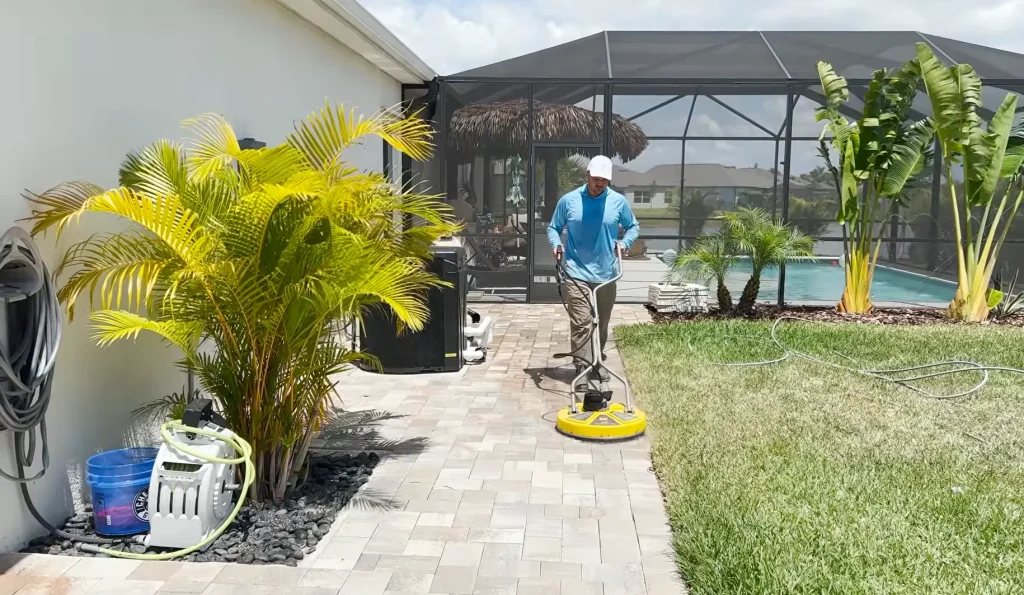
- Method: sweep, pre-treat, wash with a surface cleaner at controlled pressure, then check the joints
- Joints: joint sand is checked after the wash and refilled where it washed out
- Timing: set around dry weather, because refilled joint sand needs dry days to set
Why Do Pavers Turn Green, Stained, and Dirty?
Pavers get dirty in three ways. Cars drip oil, metal pots and furniture leave rust, and leaves and berries leave stains. Some of these settle into the paver, and our concrete staining guide explains why a plain rinse can’t always lift them.
Water causes the green film. Water lingers in the joints and in the pores of each paver, and algae and moss grow wherever it stays, so pavers in a shaded Lexington yard stay green long after the rain. Cement pavers can also show a white haze called efflorescence, a mineral deposit that comes from inside the paver. Our algae, mold, and mildew guide explains why the green keeps coming back.
How Do We Clean Each Problem on Pavers?
Each paver problem needs its own treatment, and the table below shows how we handle the common ones.
Problem on the pavers | How it’s cleaned |
Algae and moss | The growth gets a cleaning solution made for organic growth that sits for 10 to 15 minutes, then a low pressure rinse, since the soak does the work that high pressure would otherwise do. |
Dirt and leaf stains | Leaves and loose dirt get swept off first, then a surface cleaner passes over the pavers at controlled pressure, since a spinning head cleans evenly and keeps the spray close to the surface. |
Oil and grease spots | Oil gets a degreaser that sits before the wash, and the spray stays at a low angle, since a steep jet blows sand out of the joints. |
Rust spots | Rust gets a rust-specific cleaner, since plain water and scrubbing don’t lift it, and a wire brush can leave metal bits that cause new rust marks. The guide to rust stain removal covers where the stains come from. |
White haze on the surface | The white haze gets soap, water, and a stiff plastic brush first, then a cleaner made for efflorescence if it stays, since the haze is lime from inside the paver and can return. |
Weeds and low joint sand | Weeds and moss come out of the joints with a narrow jet or by hand, and the sand gets checked and refilled where it washed out. |
Can Pavers Be Pressure Washed Without Losing the Joint Sand?
Pavers can be pressure washed without losing the joint sand when the pressure stays controlled and the angle stays low. Unilock warns that the wrong pressure or nozzle can crack or erode pavers and wash out the joint material, and it says to keep the stream at a low angle. A surface cleaner helps because it spreads the water over a wide area, so no single spot takes a hard jet.
Joint sand matters because it’s what locks the pavers together. Sika’s data sheet for its polymeric sand says a pressure washer may displace hardened sand from the joints, so the crew uses a surface cleaner on the pavers, watches the sand as the water passes, and refills any that washes out. Unilock also says to check the joints after cleaning and sweep in new material if needed.
Lexington winters add to the problem, because freeze and thaw can loosen polymeric sand over time, according to Unilock, so the joints deserve a look every spring. You can read Unilock’s paver cleaning guide for a paver maker’s own steps.
Does Paver Cleaning Remove Weeds and Moss From the Joints?
Paver cleaning clears the moss on top of the pavers and most weeds in the joints, and roots that won’t let go in a tight joint may need hand pulling. Weeds start where the joint sand has settled low, because windblown seeds find room to settle there.
Weed killers need care on pavers. Some weed killers and lawn fertilizers contain iron that leaves rust colored stains, according to Tile and Stone Journal, so a sprayer near the patio can leave a mark that water won’t lift. Pulling weeds and sweeping on a regular basis also keeps new seedlings from taking root, as Unilock notes.
After the joints are clear, the crew tops up the sand so the gaps are tight again, because tight joints leave seeds less room to settle.
Why Do Pavers Look White After Cleaning?
Pavers look white after cleaning when the white is efflorescence, a mineral deposit from inside the paver. Cambridge Pavingstones explains that water moving through a paver carries lime to the surface, where it reacts with air and leaves a white film. It shows most on dark pavers. Wet pavers hide it, but the haze returns as they dry, so a fresh rinse can fool you.
The haze is only cosmetic. Unilock says efflorescence is temporary and doesn’t weaken concrete pavers, and Cambridge says it stops once the lime supply is used up, so it doesn’t last forever. Soap, water, and a stiff plastic brush come first, and an efflorescence cleaner follows if the haze stays, tested on a small spot.
New pavers show this haze most, and saw cuts and polymeric sand can leave a haze of their own. Sika says polymeric sand haze fades over time or comes off with a concrete cleaner, and Unilock says pavers must be clear of efflorescence before any sealer goes on. A pressure wash alone may leave the haze, so the crew uses the right cleaner for it.
What Should Pavers Be Cleaned With, and What Should Be Avoided?
Pavers clean up best with a mild cleaner, a stiff plastic brush, and a gentle rinse. Unilock lists soap and water for organic stains, and dish soap with a stiff plastic brush for the white haze. For mildew and algae, Unilock gives a light bleach mix of one part bleach to ten parts water, used sparingly, with the pavers kept wet and the plants protected.
A few products can ruin pavers. Unilock says strong acid can etch concrete pavers and change their color, and a wire brush can leave metal bits that cause rust stains. Bleach should never be mixed with vinegar or ammonia.
Every cleaner gets a test on a small spot first, since even paver cleaners can shift the color a little. Pavers that are already sealed get a look first, because paver sealing companies warn that too much pressure or the wrong nozzle can strip a sealer. A sealer that looks hazy or is peeling gets pointed out before the wash.
The paver brand matters too, because makers publish their own care steps. Aspire’s care bulletin says pressure washing isn’t recommended, and if a power washer is used it asks for a wide fan nozzle on low pressure with the tip kept away from the surface. An installer’s care sheet helps the crew pick the right cleaner.
When Is the Best Time to Clean Pavers in Lexington?
Pavers get cleaned best in warm, dry weather, because refilled joint sand needs dry days to set. Sika’s data sheet for its polymeric sand says the surface must be completely dry, the joints need protection from rain for at least 24 hours, and the temperature must stay above 41 degrees for 48 hours. Our scheduling guide shows how the seasons and the forecast change the plan.
New pavers need patience. Sika says polymeric sand needs at least 24 hours before foot traffic and 72 hours before cars, and it says a pressure washer may displace hardened sand from the joints, so a new patio shouldn’t get its first wash too soon. A paver sealing company says to wait at least 30 days after sealing before any pressure washing, and to use only a garden hose until then.
A cold snap or a rainy week is a good reason to wait, because wet joints can’t take new sand.
Where Does Paver Cleaning Wash Water Go in Lexington?
Paver cleaning wash water carries dirt, sand, cleaner, and sometimes grease, so it can’t run down a Lexington storm drain, where the city says only rain and snow melt belong. The wash water and storm drains guide covers the Lexington rules and what to do with the runoff.
Pavers sit next to lawns and beds, so the crew protects the plants nearby before the cleaner goes on and keeps the runoff away from them. A driveway that slopes toward a garden gets extra care.
A homeowner or neighbor who sees wash water running into a storm drain can report it to LexCall at 311 or (859) 425-2255.
What Should a Homeowner Ask Before Hiring a Paver Cleaner?
A homeowner should ask five things before hiring a paver cleaner: what pressure and tools the crew uses near the joints, what happens if the sand washes out, how the crew handles the plants and wash water, whether the cleaner gets a test first, and what the job includes.
Our crew answers all five before the job: we use controlled pressure with a surface cleaner, test the cleaner on a small spot, check the joints after the wash, and refill sand that washed out. A big area takes more time, so we say so at the walkthrough. We don’t seal, so plan any sealer separately after the pavers dry. The guide to choosing a pressure washing company has more questions to ask before you pick a crew.
Our Process for Paver Cleaning
Look, Test, and Sweep
We check the paver type, the joints, and the stains, test the cleaner on a small spot, and sweep off leaves and loose sand before any water goes on.
Pre-Treat and Let It Sit
Nearby plants get protected, then a cleaning solution made for the stain goes on and sits for 10 to 15 minutes, so the soak does the work that high pressure would otherwise do.
Wash With Controlled Pressure
A surface cleaner passes over the pavers at controlled pressure, and a wand or narrow jet clears the weeds, edges, and tight spots.
Rinse and Check the Joints
The pavers get a final rinse, the joints get checked, and sand that washed out gets refilled. Wet pavers hide stains, so we check them again once they’ve dried.
How Much Does Paver Cleaning Cost in Lexington, KY?
Paver cleaning in Lexington is priced after we look at the pavers, since the size, the paver type, and the amount of growth and staining change the work. Our pricing guide puts paver cleaning next to the other services, so the numbers are easy to compare.
- The size of the area in square feet
- The paver type: concrete, brick, or natural stone
- How much algae, moss, and staining there is
- How many weeds and how much joint sand needs work
Why Choose Our Lexington Paver Cleaning Crew
Gentle on the Joints
Controlled pressure and a low angle keep the spray from digging out the joint sand, and sand that washes out gets refilled.
Cleaner Matched to the Stain
Algae, rust, oil, and white haze each get their own treatment, tested on a small spot first.
Straight Answers
We tell you up front when a white haze may come back, when a stain may leave a shadow, or when pavers are too loose to wash safely.
Common Questions
Paver Cleaning FAQs
Lexington homeowners ask these questions before they book paver cleaning.
Our 30-Day Satisfaction Guarantee
Our 30-day guarantee covers the pavers we wash. If an area looks wrong within 30 days, call us or use the contact form, and we’ll come back at no extra charge. A white haze from the paver itself, deep rust, or old oil can leave a mark or return, so we say so before we start.
Related Cleaning Services
Pavers connect to patios, driveways, and walkways that need cleaning too. Here are related services.
Get a Free Paver Cleaning Estimate
Ready for cleaner pavers? Request a free estimate, and we’ll look at the pavers, the joints, and the plants and beds around them. Lexington PressureWash handles every job.