
Commercial · Parking Lot Care
Parking Lot Cleaning Lexington, KY | Oil, Gum & Tire Marks
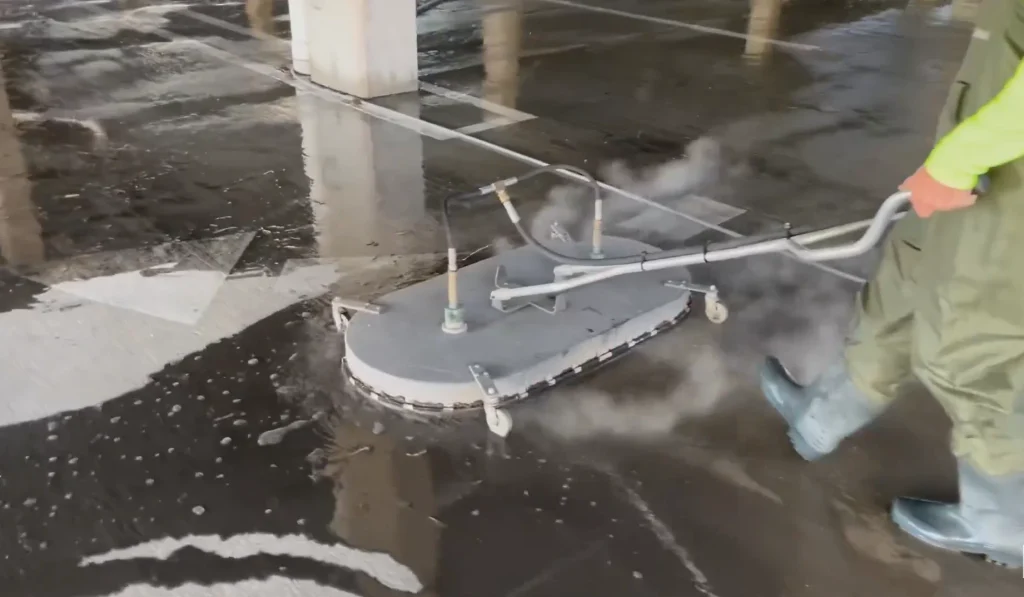
Parking lot cleaning in Lexington lifts oil drips, tire marks, gum, and built-up grime with hot water, a degreaser, and a surface cleaner. We collect the wash water, work days or nights, and we’ll send a photo report when the job is done.

Hot Water for Heavy Oil

Insured, COI on Request

Free Estimates
Parking Lot Cleaning in Lexington, KY
Parking lot cleaning in Lexington lifts the oil, tire rubber, gum, and grime that sweeping leaves behind. We wash lots, drive-thru lanes, dumpster pads, and parking garage floors with a degreaser, hot water, and a surface cleaner, and we collect the wash water so it stays out of the storm drain. Many lots also need regular upkeep, and it fits with our commercial pressure washing service. Here’s how parking lot cleaning works.
- Pricing: set after we see the lot, since size, stains, and access change the work
- Method: a degreaser on oil and rubber, hot water on heavy buildup, and a surface cleaner on open pavement
- Wash water: covered drains, berms, and pickup, with nothing sent to the storm drain
- Schedule: days or nights, planned around when your lot is quietest
Does a Lexington Parking Lot Need Sweeping or Washing?
A parking lot needs sweeping for loose litter, leaves, and grit, and it needs washing for anything stuck to the pavement. Sweeping picks up what sits on top, but a sweeper can’t lift oil, rubber, gum, or the gray film that builds up over months. We only wash, so we’ll tell you when sweeping is the better call. Loose grit gets swept first, because water turns dry grit into a muddy slurry that runs toward the drains. Concrete lots also stain in ways a rinse can’t fix, and our concrete staining guide covers them.
Washing makes sense when you can see dark oil spots, black tire marks, flattened gum, or a dull gray film across the drive lanes. Green or brown streaks near trees and planters point to leaves and algae, and orange streaks near sprinkler heads point to rust. For help sorting out what a surface has, see our Lexington exterior problems guide, which covers the common causes.
How Do We Treat Each Kind of Parking Lot Mess?
We match the treatment to what’s on the pavement, because rubber, oil, gum, and grime each break down in a different way.
What’s on the lot | How we clean it |
Oil drips and leaks | Oil sinks into pavement under parked cars, so a degreaser soaks in first, and then hot water and a surface cleaner lift it out. |
Tire marks and rubber | Rubber sticks in drive-thru lanes and garage ramps where tires turn, so a degreaser and hot water loosen it before the wash. |
Chewing gum | Hot water softens gum so it lifts off the pavement, and a turbo nozzle gets the pieces a surface cleaner misses. |
Orange stains from sprinklers | Iron in sprinkler water leaves orange marks on pavement and curbs, and they need a rust remover. Read more about rust stain removal. |
Dumpster pads and drive-thru lanes | Grease and food waste build up fastest here, so we use a degreaser and hot water and collect the runoff. |
Garage floors and drains | Garage floors get swept first, then degreased and washed with the drains covered, and the wash water gets picked up. |
Can Pressure Washing Alone Remove Oil From a Parking Lot?
Pressure washing alone rarely removes oil from a parking lot, because water can’t break oil down once it’s soaked into the pavement. The University of Kentucky’s parking garage cleaning procedure starts with sweeping, adds absorbent to pooled oil, and then uses a biodegradable degreaser before any washing begins.
We follow the same order on a lot. Loose grit gets cleared first, a degreaser goes on the oil, and hot water finishes the job once the oil has loosened. Heavy oil under a parking spot can take a second pass, and very old oil can leave a faint shadow.
Heavy oil takes patience. We’ve cleaned a parking lot in Winchester, and we plan every lot job around one rule: the oil has to loosen before the wash can lift it. Lot oil follows the same pattern as the six month old, 20 foot engine oil stain we removed from a Frankfort driveway, which took hot water and a second pass to come out completely.
Where Does Parking Lot Wash Water Go in Lexington?
Parking lot wash water belongs in a sanitary sewer or a collection system, because Lexington’s storm drains send water to creeks without treatment. The city says only rain and snow melt belong in a storm drain, and used motor oil, antifreeze, and detergents are on its illicit discharge list.
That rule shapes how we work. We cover the storm drains, use a degreaser and hot water on heavy buildup, and collect the runoff with berms and pickup. We filter out solids and oil, and the water goes to a sanitary sewer only where the owner and the utility allow it. Nothing goes to the storm drain.
LexCall takes reports of oil or soapy water in a storm drain at 311 or (859) 425-2255.
Can We Wash a Busy Parking Lot While Customers Are Around?
Washing a busy parking lot works best when the lot is quiet, so we can work during the day or at night. Pressure washing throws mist and loose grit, and cars, shop windows, and people nearby shouldn’t get hit by it. Night or early morning work keeps customers away from the spray and keeps the parking spots free.
A daytime job can still work when we clean in sections and the manager marks off the rows we’re in. A surface cleaner keeps the spray low to the ground, which cuts down on mist compared with a wand. Hoses and equipment stay out of the drive lanes and entrances.
Cars parked in the work zone need to move first, because overspray and loose grit can land on paint. We’ll tell the manager which rows to clear and when, and we look over each finished section before we move to the next.
What Should a Contractor Never Do on a Parking Lot?
A contractor should never rinse a parking lot into the storm drain, even when the water looks clean. Oil and fine grit don’t show in the water, and Lexington’s storm drains lead to creeks. Soapy runoff causes the same problem, since detergents are on the city’s list of illicit discharges.
A leaf blower isn’t a cleanup plan either. Blowing grit and litter toward the street sends it straight to the storm drain, and the noise carries into the evening hours. Debris belongs in a bag or a truck, and the gutter is the wrong place for it.
High heat and hard pressure can also damage worn pavement, so we test a small spot first. Old, crumbling concrete and aging asphalt need a lighter hand, because heat softens the binder in asphalt and a hard wand can pit weak concrete.
What Should a Property Manager Ask Before Hiring a Parking Lot Cleaner?
A property manager should ask four things before hiring a parking lot cleaner: proof of insurance, how the wash water is handled, what the job covers, and when the crew will be on site. Those questions screen out two problems people raise about lot cleaning crews, which are missed corners and missed visits.
Our general liability insurance is active, and we can send you a certificate of insurance when you ask. We cover the drains, collect the wash water, photograph existing damage before we start, and send a photo report when we finish. Edges, curb lines, island corners, and dumpster pads all get cleaned, so the finished lot looks even. Rain can wash the degreaser away before it works, so our scheduling guide explains how we plan around it.
How Often Should a Lexington Parking Lot Be Washed?
A parking lot should be washed on a schedule that fits its traffic, because no single schedule fits every lot. Restaurant, gas station, and grocery lots collect oil, food waste, and gum faster than an office lot, and lots under trees collect leaf stains. Planters and grass islands need protection, and our guide to grass, plants, and pets explains how we protect landscaping while we work.
A wash after winter makes sense, since salt, sand, and oil from the cold months collect on the lot. We can also clean before a busy season or around an event.
We’ll suggest a schedule when we see the lot. Drive-thru lanes and dumpster pads usually need cleaning more often than open parking rows, and a recurring contract can be planned around your calendar.
Our Process for Parking Lot Cleaning
Walk the Lot and Protect the Drains
We look over the whole lot, photograph any existing damage, find the oil, gum, and tire marks, and cover the storm drains before any water flows.
Pretreat Oil and Rubber
A degreaser goes on the oil, rubber, and dumpster pad grease and sits long enough to break it down, which makes the wash work faster.
Wash With Hot Water and a Surface Cleaner
A surface cleaner covers open pavement evenly, and hot water goes on heavy oil, grease, and gum, so the lot dries without wand streaks.
Collect the Water and Send a Photo Report
We collect and filter the wash water, check the lot once it dries, and send a photo report of the finished work.
How Much Does Parking Lot Cleaning Cost in Lexington, KY?
Parking lot cleaning in Lexington is priced after we see the lot, since no two sites need the same work. The quote depends on the factors below, and our pricing guide explains how pressure washing prices work.
- The size of the lot and how many parking spaces it has
- How much oil, gum, and rubber is on the pavement
- Dumpster pads, drive-thru lanes, and garage floors that need extra work
- Day or night work, and whether the crew has to work in sections
Why Choose Our Lexington Parking Lot Cleaning Crew
Insured, With a COI
Active general liability insurance covers our work on your lot, and we can send a certificate of insurance when you ask for one.
Hot Water for Hard Jobs
Hot water breaks down heavy oil, grease, and gum faster than cold water, so those spots clean up with fewer passes.
Straight Answers
We tell you up front when old oil might leave a faint shadow, and photos show what changed when the job is done.
Common Questions
Parking Lot Cleaning FAQs
Lexington property managers and business owners ask these questions before scheduling parking lot cleaning.
Our 30-Day Satisfaction Guarantee
Our 30-day guarantee covers the pavement we clean. If an area we cleaned doesn’t look right within 30 days, call us or use the contact form, and we’ll come back and make it right at no extra charge. Very old oil can leave a faint shadow, and we say so before we start.
Related Commercial Cleaning Services
Parking lots often sit next to other areas that need cleaning. Here are a few related services.
Get a Free Parking Lot Cleaning Estimate
Ready for a cleaner parking lot? Request a free estimate, and we’ll look at the lot, talk through the stains and traffic areas, and give you a clear price. See how Lexington PressureWash handles every job.