
Commercial · Parking Garages
Parking Garage Cleaning Lexington, KY | Oil, Salt & Tire Marks
Parking garage cleaning in Lexington lifts oil, tire marks, winter salt, and gum from concrete levels, stairwells, and walls with a hot water machine and a degreaser matched to the stain. The crew works level by level, and the wash water is planned before the first rinse.
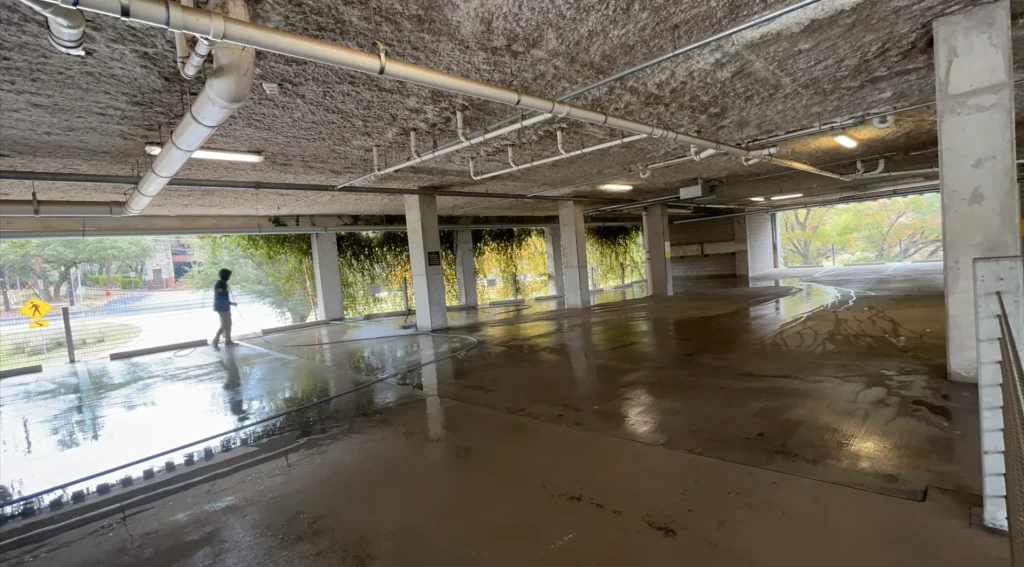

Hot Water, Level by Level

Insured, COI on Request

Free Estimates
Parking Garage Cleaning in Lexington, KY
Parking garage cleaning in Lexington washes the oil, tire rubber, salt, sand, and grime off the concrete floors, stairwells, and lower walls of apartment, office, hospital, and downtown parking decks. The lower levels are covered, so rain doesn’t rinse them, and the dirt stays until someone washes it. We clean garages as part of our commercial pressure washing service. Here’s how a garage wash works.
- Pricing: set after we walk the garage, since levels, square footage, stain load, and how many cars stay parked change the work
- Method: sweep or blow out loose sand first, pre-soak oil spots, then a hot water wash, then a rinse
- Wash water: planned before we start, with drains blocked and the water handled with the property owner’s sewer permission
- Schedule: level by level, planned around your drivers and residents
Why Do Parking Garage Floors Get So Dirty?
Parking garage floors get dirty because cars drip oil and antifreeze, tires leave black rubber on the edges and corners, and winter traffic tracks in road salt and sand. With no rain to rinse the lower levels, the buildup stacks up year after year. Oil spots make stalls slippery, and brake dust gets tracked into attached buildings. Our concrete staining guide explains why oil and rubber leave a mark that a rinse can’t lift.
The same buildup collects around stairwells, elevator lobbies, and entrances, where people drop gum and carry in grease on their shoes. Damp corners and spots near drains can grow algae too, and our algae, mold, and mildew guide explains why it keeps coming back.
How Do We Clean Each Part of a Parking Garage?
Each part of a garage needs its own steps, and the table below shows how we handle the common ones.
Part of the garage | How it’s cleaned |
Loose sand and debris | Loose sand, gravel, and trash get swept or blown out first, because wet sand is slow to push and can clog the drains. |
Oil and antifreeze spots | Pooled oil gets soaked up with oil dry, and the spots get a degreaser that sits before the hot water wash. |
Tire marks on edges and corners | Black rubber on edges and corners gets a cleaner that sits, a soft brush, and a hot water rinse, since a plain rinse leaves the dark ring behind. |
Stairwells, lobbies, and entrances | Stairs, landings, and lobby floors get hot water for grease and gum, and the stairs get washed from the top down. Read more about concrete cleaning. |
Winter salt and grime | Salt and winter grime get a full rinse, because the salt cars bring in can crack concrete and, over the years, corrode the steel inside it, and a spring wash takes it off. |
Columns, walls, and drains | The lower part of columns and walls gets washed with the floor, and the floor drains and sand traps get a look so water can leave the level, since standing water can damage steel, concrete, and coatings. |
How Often Should a Parking Garage Be Cleaned?
A parking garage should be power washed at least once a year, including the stairways, according to the University of Missouri’s garage maintenance guidelines. A Cleaner Times article quotes a contractor who says twice a year is the minimum, and an FMLink article says coating warranty manuals call for washing in early spring and early fall.
Sweeping between washes keeps the sludge down, since sweeping before a power wash greatly cuts the sludge and speeds up the rinse. We’ll suggest a schedule after we walk the garage.
Dark tire rings, tacky oil spots, and a gritty floor usually mean it’s time. You can read the University of Missouri’s guidelines for the full maintenance list.
Where Does Parking Garage Wash Water Go in Lexington?
Parking garage wash water carries oil, antifreeze, rubber, and salt, so it can’t go down a Lexington storm drain, where the city says only rain and snow melt belong. The wash water and storm drains guide lays out why wash water needs a plan before any job starts.
The University of Kentucky’s parking garage cleaning fact sheet shows how a Lexington campus handles it: sweep or blow out the debris, soak up pooled oil with oil dry, pre-soak oil spots with a biodegradable degreaser, block every storm drain, and send the water to the sanitary sewer or haul it to a treatment plant. We follow the same order, and the wash water gets handled with the property owner’s sewer permission.
A driver or neighbor who sees oily water running into a storm drain can report it to LexCall at 311 or (859) 425-2255.
Is It Safe to Pressure Wash a Parking Garage Floor?
Pressure washing a parking garage floor is safe on bare concrete when the pressure and the cleaner fit the surface. A coated deck is different, since two coating makers, Sika and Pecora, cap nozzle pressure at 1,000 psi for their traffic coatings, and Sika says to hold the nozzle at least 24 inches from the surface.
Both makers say to avoid strong solvents, and Sika adds bases, acids, and wire brushes, so a coated deck gets a mild detergent and a soft bristle brush. Joints matter too. Sealant joints are the most common place for a garage to leak, so the crew checks the joints and coatings first and keeps the wand back from them. Hot water helps because heat loosens oil without more pressure.
Ask the owner before the wash whether the floor has a coating, a membrane, or a warranty. A coated floor may need a gentler wash, and we’ll say so at the walkthrough if the job calls for a different method.
What Should a Contractor Never Do in a Parking Garage?
A contractor should never run a gas engine inside a closed garage, because engine exhaust holds carbon monoxide, a gas you can’t see or smell. The CDC says to never place a pressure washer engine in a garage or other enclosed space, and one maker’s manual says the same about the oil burner on a hot water machine and warns that a fan or open windows don’t supply enough fresh air. The machine stays outside and the hose runs in.
Sand and gravel shouldn’t go down the drains either, so loose debris gets swept or blown out first and hauled away. A narrow tip shouldn’t sit on joints or membranes, and spray shouldn’t reach parked cars, so any car that stays gets a wide margin.
The third mistake is pushing oil toward a drain. Oil that reaches the water ends up in the sewer or a creek, so pooled oil gets soaked up with oil dry before any rinse.
What Should a Property Manager Ask Before Hiring a Parking Garage Cleaner?
A property manager should ask five things before hiring a parking garage cleaner: proof of insurance, how the crew handles the wash water, how many levels can be cleaned at a time, who tells drivers to move their cars, and whether the equipment fits a garage that size.
Active general liability insurance covers our work, a certificate of insurance is available on request, and we photograph each level before and after, and the photos work as a cleaning record for the owner. A big deck can need more water, more hoses, and fire hydrant access, so we’ll say at the walkthrough if a garage is bigger than our equipment suits. The guide to choosing a pressure washing company adds more questions worth asking before you sign.
How Do You Clean a Parking Garage With Cars in It?
A parking garage needs its cars moved off each level before the wash, so the manager tells drivers when to move, and level by level work keeps part of the garage open. Our scheduling guide explains how Lexington rain, heat, and wind shape the plan.
Cars that can’t be moved stay in place, and we clean as much of the level as we can around them. A spot under a parked car may wait for the next wash, and Cleaner Times lists cars left in place among the main obstacles in garage work.
The manager picks the levels and the days, and drivers need time to find another spot, so word should go out well before the wash day. Early mornings, weekends, and slow days usually bother the fewest drivers.
Our Process for Parking Garage Cleaning
Walk and Sweep the Garage
We walk each level, photograph cracks, joints, and coatings, and sweep or blow out sand and trash before any water goes on.
Block Drains and Pre-Soak
Storm drains get blocked, pooled oil gets soaked up, and oil spots and tire marks get a degreaser that sits.
Hot Wash Level by Level
A hot water wash works through one level at a time, from the walls and columns down to the floor. Stubborn spots may need a second pass.
Rinse, Handle the Water, and Send Photos
The level gets a final rinse, the wash water gets handled with the owner’s sewer permission, and a photo report follows. Wet concrete hides oil stains, so the level gets checked again once it dries.
How Much Does Parking Garage Cleaning Cost in Lexington, KY?
Parking garage cleaning in Lexington is priced after we walk the garage, since levels, square footage, stain load, and access change the work. For a national reference, a 2020 Cleaner Times article cites 24 cents per square foot for garage work, and an FMLink article puts it at four to 15 cents. Our pricing guide shows how a pressure washing quote gets built.
- The number of levels and the total square feet
- How much oil, tire rubber, and salt has built up
- Whether cars stay parked, and how many levels can be closed at a time
- Water access, drain layout, and where the wash water can go
Why Choose Our Lexington Parking Garage Cleaning Crew
Insured, With a COI
Active general liability insurance covers our work in your garage, and we’ll send a certificate of insurance on request.
Hot Water, Level by Level
A hot water machine lifts oil without extra pressure, and working one level at a time keeps part of the garage open for drivers.
Straight Answers
We tell you up front when old oil may leave a shadow in the concrete or a coated floor needs a gentler wash, and the photos show what’s changed.
Common Questions
Parking Garage Cleaning FAQs
Lexington property managers and facility managers ask these questions before they book parking garage cleaning.
Our 30-Day Satisfaction Guarantee
Our 30-day guarantee covers the garage levels we wash. If a level looks wrong within 30 days, call us or use the contact form, and we’ll come back at no extra charge. Deep oil can leave a shadow in the concrete and some tire marks don’t lift all the way, so we say so before we start.
Related Commercial Cleaning Services
Parking garages connect to entrances, walkways, and loading areas that need exterior cleaning too. Here are related services.
Get a Free Parking Garage Cleaning Estimate
Ready for a cleaner garage? Request a free estimate, and we’ll walk the levels and look at the floors, the joints, and the drains. Lexington PressureWash handles every job.