Commercial · Dumpster Pads
Dumpster Pad Cleaning Lexington, KY | Grease, Odor & Buildup
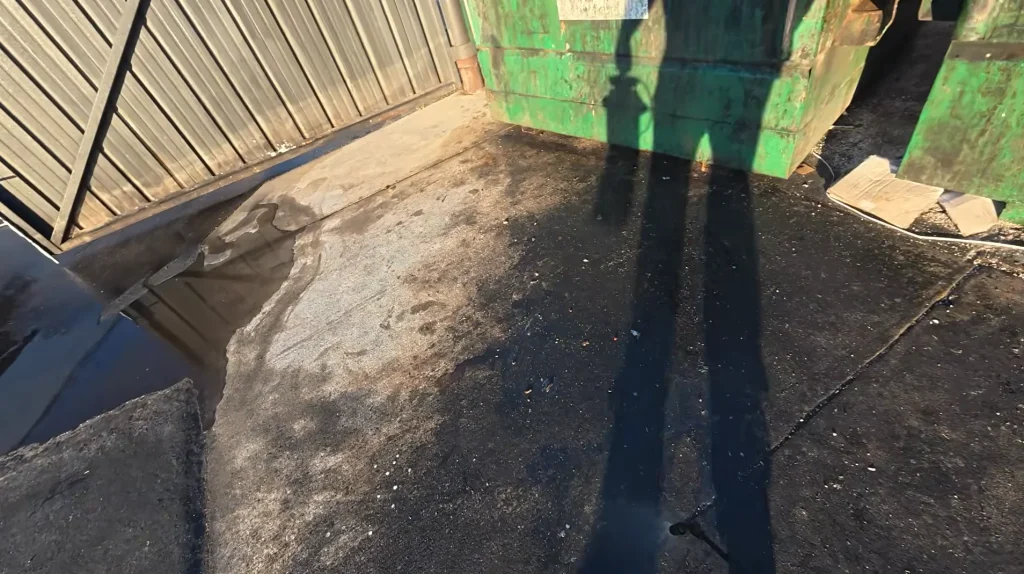
Dumpster pad cleaning in Lexington lifts grease, food residue, and odor from concrete pads and enclosures with a hot water machine and a degreaser matched to the mess. Thick grease gets scraped first, and the wash water stays out of the storm drain.

Hot Water, Grease Scraped First

Insured, COI on Request

Free Estimates
Dumpster Pad Cleaning in Lexington, KY
Dumpster pad cleaning in Lexington removes the grease, food residue, and smell that soak into the concrete around restaurant, apartment, grocery, and shopping center dumpsters. A dumpster pad is the slab the dumpster sits on, and it stays dirty after the trash is hauled away. We clean pads and enclosures as part of our commercial pressure washing service. Here’s how a pad wash works.
- Pricing: set after we see the pads, since size, grease thickness, and how many dumpsters sit on them change the work
- Method: scrape thick grease, then a hot water wash with a degreaser matched to the grease, then a rinse
- Wash water: planned before we start, with drains covered, grease scraped first, and the water handled with the property owner’s sewer permission
- Schedule: set around your deliveries and trash pickup, with early starts when the lot is quiet
Why Does a Dumpster Pad Stay Greasy After the Dumpster Is Emptied?
A dumpster pad stays greasy because food, grease, and liquid soak into the concrete, and emptying the dumpster doesn’t pull them back out. Leaking trash bags and overflowing used cooking oil bins keep adding more. Over time the pad turns dark and slick, and the old grease holds the smell. Our concrete staining guide explains why grease leaves a mark that plain water can’t lift.
A dirty pad also draws pests. The EPA says power washing dumpsters and waste areas regularly removes sticky buildup and makes them less attractive to flies, wasps, and cockroaches. Heat speeds up the smell, and our scheduling guide explains how we plan around Lexington rain, heat, and wind.
How Do We Clean Each Part of a Dumpster Pad?
Each part of a pad needs its own steps, and the table below shows how we handle the common ones.
Part of the pad | How it’s cleaned |
Loose trash and litter | Loose trash gets picked up and the pad gets swept before any water goes on, because wet litter clogs drains and spreads the mess. |
Thick or caked grease | Thick grease gets scraped up and bagged first, then a hot water wash and a degreaser matched to the grease loosen the rest, and stubborn spots get a second pass. |
Light grease and food residue | Light buildup gets a degreaser that sits long enough to break the grease down, then a hot water rinse with a surface cleaner. |
Walkways and drive lanes | The apron, the back door walkway, and the drive lane near the pad get washed too, since grease rides in on shoes and tires. Read more about concrete cleaning. |
Smell left after the wash | A deodorizing rinse finishes the job when a pad still smells, since odor stays in the concrete until the food and liquid that’s soaked in is lifted out. |
Dumpster outside and enclosure walls | The outside of the dumpster, the enclosure walls, and the gate get a washdown, and the dumpster’s paint stays out of any strong degreaser. |
Who Is Responsible for Cleaning a Dumpster Pad in Lexington?
The owner or tenant who has the dumpster is responsible for keeping it and the area around it clean in Lexington, because the city doesn’t clean dumpsters. Lexington’s rules say dumpsters must be kept safe and sanitary, litter can’t pile up around them, and repairs and maintenance fall to the owner or leaseholder.
Restaurant dumpster pads have another rule to meet. Kentucky follows the FDA Food Code, and the code says a trash storage area has to sit on a smooth, durable, nonabsorbent surface such as concrete or asphalt and be kept clean.
In a shopping center or apartment complex, the lease decides whether the tenant, the landlord, or the property manager pays for the pad wash. The city’s guide suggests a garden sprayer and a common disinfectant for the dumpster itself, but grease in a pad needs a hot water machine. You can read the city’s dumpster rules for the full list.
Where Does Dumpster Pad Wash Water Go in Lexington?
Dumpster pad wash water carries grease, food waste, and cleaner, so it can’t go down a Lexington storm drain, where the city says only rain and snow melt belong. The wash water and storm drains guide covers what the city allows and where the water can go.
The University of Kentucky’s parking garage cleaning fact sheet names the safe routes for wash water: block every storm drain, then send the water to the sanitary sewer or haul it to a treatment plant. On a pad job, we cover the nearby storm drains and handle the wash water with the property owner’s sewer permission, and scraped grease goes in the trash, never down a drain. Greasy water is a sewer problem too, because Lexington calls fats, oil, and grease from food businesses a major problem for its sanitary sewer, so the grease gets scraped up first and less of it reaches the water.
A manager or neighbor who sees greasy water running into a storm drain can report it to LexCall at 311 or (859) 425-2255.
Does a Dumpster Pad Need Hot Water and a Degreaser?
A greasy dumpster pad needs hot water and a degreaser, because grease melts as it warms and cold water mostly pushes it around. A cold water washer can handle a lightly dirty pad with the right cleaner, but a hot water machine is what lifts thick, old grease. Our hot water machine melts the grease while the degreaser works.
The degreaser has to fit the grease and the surface. Caustic cleaners such as sodium hydroxide cut through heavy grease, but the safety data sheet for sodium hydroxide warns of severe skin burns and eye damage and says it can corrode metals such as aluminum. For that reason, the crew picks each degreaser with care and wears chemical resistant gear.
Scraping comes first. Thick grease gets scraped up and bagged before the wash, so the degreaser reaches the concrete and the water has less grease to carry off.
What Should a Contractor Never Do at a Dumpster Pad?
A contractor should never rinse grease or wash water into a storm drain, because storm drains lead to creeks and the water isn’t treated first. Scraped grease belongs in the trash.
Degreaser also shouldn’t hit a dumpster’s paint, and a strong caustic mix can discolor asphalt, so a manager should hear about any color change before the wash starts. Bleach shouldn’t be mixed with other cleaners either, since the mix can give off toxic gas.
The third mistake is too much pressure up close. A narrow tip held near the surface can gouge worn concrete or soft asphalt, and cracks and damage get photographed before the wash starts.
What Should a Property Manager Ask Before Hiring a Dumpster Pad Cleaner?
A property manager should ask five things before hiring a dumpster pad cleaner: proof of insurance, whether the crew has a hot water machine, where the wash water goes, who scrapes and hauls off the grease, and which areas the price covers.
Active general liability insurance covers our work, a certificate of insurance is available on request, and we photograph the pad before and after. Managers often want the back door walkway and drive lane washed with the pad, so a quote should list each area. The guide to choosing a pressure washing company has more questions to bring to a contractor.
How Often Should a Dumpster Pad Be Cleaned?
A dumpster pad should be cleaned as often as grease and smell come back, and that depends on what goes in the dumpster. Restaurant and grocery pads take food grease and usually need washing more often than office or apartment pads, and summer heat speeds up the smell. Our guide to grass, plants, and pets explains how we protect the plantings next to an enclosure.
Apartment communities and shopping centers with several pads often put them all on one schedule, so the pads look alike and a manager has one date to track. A first wash on a pad that’s never been cleaned takes the most work, and later washes go faster because the old grease is gone.
We’ll suggest a schedule after we see the pad. Grease spots, a sour smell, flies, and a slick feel underfoot usually mean it’s time.
Our Process for Dumpster Pad Cleaning
Walk the Pad and Clear Debris
We look over the pad, photograph cracks and damage, pick up loose trash, and we’ll sweep the area before any water goes on.
Cover Drains and Scrape
Nearby storm drains get covered, and thick grease gets scraped up and bagged.
Degrease and Hot Wash
A degreaser goes on and sits, then a hot water wash lifts the grease. Heavy buildup may need a second pass.
Rinse, Handle the Water, and Send Photos
The pad gets a final rinse, the wash water gets handled with the owner’s sewer permission, and a photo report follows.
How Much Does Dumpster Pad Cleaning Cost in Lexington, KY?
Dumpster pad cleaning in Lexington is priced after we see the pad, since size, grease thickness, and the areas included change the work. A first wash on a heavy grease pad costs more than the washes that follow, because the old grease is already gone. Our pricing guide lists what raises or lowers a pressure washing quote.
- The size of the pad and how many dumpsters sit on it
- How thick the grease is, and how long it’s built up
- Whether the walkways, drive lane, and enclosure walls are included
- Whether the pad is concrete or asphalt, and which drains need covering
Why Choose Our Lexington Dumpster Pad Cleaning Crew
Insured, With a COI
Active general liability insurance covers our work on your property, and we’ll send a certificate of insurance on request.
Hot Water, Matched Degreaser
A hot water machine melts the grease, and the degreaser is picked for the grease and the surface, so the dumpster’s paint and the asphalt stay protected.
Straight Answers
We tell you up front when old grease may leave a stain in the concrete or a strong cleaner may change the color of asphalt, and the photos show what’s changed.
Common Questions
Dumpster Pad Cleaning FAQs
Lexington property managers and business owners ask these questions before they book dumpster pad cleaning.
Our 30-Day Satisfaction Guarantee
Our 30-day guarantee covers the pads we wash. A spot that looks wrong within 30 days gets a return visit at no extra charge, so call us or use the contact form. Deep grease can leave a stain in the concrete and a strong cleaner can change the color of asphalt, so we’ll say so before we start.
Related Commercial Cleaning Services
Dumpster pads sit next to the sidewalks, loading areas, and parking lots that need exterior cleaning too. Here are related services.
Get a Free Dumpster Pad Cleaning Estimate
Ready for a cleaner pad? Request a free estimate, and we’ll look at the grease, the surface, and the drains. Lexington PressureWash handles every job.